
Walk through any industrial plant, chemical storage yard, or fuel depot long enough, and you start noticing the small things. The slight discoloration along a concrete berm where something leaked last winter. The patch job on a floor drain that nobody quite remembers approving. The faint chemical smell that the old-timers shrug off. These are not isolated quirks — they are early warning signs that a facility’s liquid containment strategy is quietly failing.
Spill containment is one of those subjects that gets a lot of attention after an incident and almost none before one. Regulatory agencies like the EPA and OSHA have established clear requirements around secondary containment for facilities handling hazardous materials, petroleum products, and industrial chemicals. But compliance alone does not equal protection. A system that meets minimum code requirements on paper can still fail in the field if the underlying materials are wrong for the job.
This article takes a ground-level look at what effective secondary containment actually requires, why traditional materials keep falling short, and how modern coating technologies — particularly polyurea — are changing the way safety professionals approach liquid hazard management.
The Real Cost of Containment Failure
It is easy to frame containment failure as a regulatory problem. Pay the fine, remediate the site, update the inspection log. But the actual cost runs much deeper than that.
Environmental contamination from a single significant spill can take years to address. Hydrocarbons and heavy metals don’t behave politely once they enter soil or groundwater. Cleanup costs routinely reach six or seven figures even for relatively small releases. Litigation from neighboring properties, municipalities, and environmental groups can extend remediation expenses dramatically beyond initial estimates.
Then there are the human costs. Workers who operate around failing containment systems face daily exposure to fumes, skin contact hazards, and slip risks from pooled fluids. Many of the most common industrial chemicals — including diesel fuel, hydraulic fluid, and a wide range of solvents — are chronic health risks with cumulative effects. A berm that seeps, a sump that doesn’t drain properly, or a floor coating that has cracked and allowed chemicals to penetrate into the substrate are not just maintenance issues. They are active hazards to the people working nearby.
Insurance carriers are increasingly scrutinizing containment infrastructure during underwriting reviews. Facilities that cannot demonstrate a robust, well-maintained system often face premium increases or reduced coverage — before anything has even gone wrong.
Where Traditional Containment Materials Fall Short
For decades, the standard approach to secondary containment relied on concrete, brick-and-mortar berms, and epoxy coatings. Each of these materials has legitimate use cases. None of them are particularly well-suited to the real operating conditions found in most industrial environments.
Bare concrete is porous by nature. It absorbs liquids over time, allowing chemicals to penetrate deep into the substrate even when the surface appears intact. Once hydrocarbons or acidic chemicals enter the concrete matrix, the material begins to degrade from the inside. What looks like a solid berm on a Monday morning inspection might be quietly crumbling beneath the surface.
Epoxy coatings were considered a significant improvement over bare concrete when they were introduced, and they are — to a point. A properly applied epoxy floor adds a barrier layer that resists many common chemicals. The problem is that epoxy is rigid. Concrete moves. Thermal cycling, settling, vibration from heavy equipment, and the natural curing behavior of large concrete pours all create micro-movement in the substrate. Epoxy doesn’t move with it. Cracks form, often at seams and edges first, and those cracks become entry points for the exact chemicals the coating was meant to keep out.
Field-applied sealants and caulks are widely used to address those cracks, but they create their own maintenance burden. They age, peel, and fail — sometimes faster than the coating they were meant to fix. A maintenance team that spends its time chasing failed sealant joints is not maintaining a containment system. It’s fighting an ongoing battle it was never meant to win.
Understanding Polyurea as a Containment Solution
Polyurea is a polymer chemistry that emerged from the broader polyurethane family but behaves quite differently in practice. Where polyurethane coatings tend to be moisture-sensitive during application and relatively slow to cure, polyurea cures almost immediately after application — often achieving full mechanical properties within an hour or less of being sprayed. This speed has practical implications for industrial environments where extended downtime is not realistic.
The material is elastomeric, meaning it stretches and returns to its original shape rather than cracking under stress. Elongation values for quality polyurea formulations frequently exceed 300 percent, which means the coating can handle significant substrate movement without losing integrity. Joints, cracks, and surface imperfections that would cause an epoxy system to fail over time are simply absorbed by a well-applied polyurea membrane.
Chemical resistance is another area where polyurea consistently outperforms older coating technologies. The cross-linked polymer matrix resists a broad spectrum of industrial chemicals including petroleum products, dilute acids and bases, salts, and many organic solvents. This is not a universal resistance — any coating professional will tell you that chemistry selection depends heavily on the specific chemicals present in a given facility — but polyurea’s baseline resistance profile is substantially broader than most alternatives.
For facilities that handle a range of hazardous materials, secondary containment using polyurea provides a flexible, durable, and long-term solution that reduces both the frequency and the severity of containment failures. The material can be applied to virtually any substrate, conforms to complex shapes and geometries, and creates a seamless membrane that eliminates the joint vulnerabilities that plague conventional systems.
Application Environments Where Polyurea Excels
Petroleum storage terminals were among the earliest commercial adopters of polyurea containment coatings, and for obvious reasons. Tank farms handle large volumes of hydrocarbons under a wide range of temperature conditions, and a containment failure at that scale is both an environmental and a fire safety emergency. The combination of chemical resistance, flexibility, and rapid cure made polyurea a natural fit for secondary containment berms around above-ground storage tanks.
Chemical manufacturing facilities present a different but equally demanding challenge. Process areas often involve multiple chemicals, temperature extremes, and aggressive cleaning regimens that can degrade conventional coatings quickly. A seamless polyurea membrane applied to floors, sumps, trenches, and containment walls holds up to regular cleaning with caustic or acidic solutions far better than systems with joints and seams that trap residue and allow chemical attack at those weak points.
Wastewater treatment facilities have specific concerns around biological activity and the corrosive nature of treated water, sewage gases, and the chemicals used in the treatment process itself. Polyurea’s resistance to hydrogen sulfide — a particularly aggressive compound in wastewater environments — makes it a standard choice for lining wet wells, digesters, and secondary containment structures in these settings.
Agricultural facilities that store fertilizers, pesticides, and herbicides face a unique regulatory environment with strict requirements around runoff prevention. A cracked concrete secondary containment pad is not just a maintenance problem in this context — it can result in enforcement action from state or federal agricultural regulators. Polyurea-lined pads provide the seamless, chemically resistant barrier that compliance requires, and they hold up to the outdoor exposure conditions that agricultural settings typically present.
Installation Considerations and What to Expect
The performance of any polyurea containment system depends enormously on the quality of surface preparation. This point cannot be overstated. A beautifully formulated coating applied to a poorly prepared substrate will fail prematurely regardless of its chemical properties. Concrete surfaces need to be cleaned of all contaminants, and any existing coatings, sealers, or curing compounds must be removed. Shot blasting or grinding to achieve the appropriate surface profile is standard practice.
Existing cracks and voids should be addressed before the primary coating is applied. Depending on their size and extent, this might involve injection grouting, flexible caulk, or an initial broadcast of aggregate followed by a primer coat. The goal is to give the polyurea a sound, consistent surface to bond to.
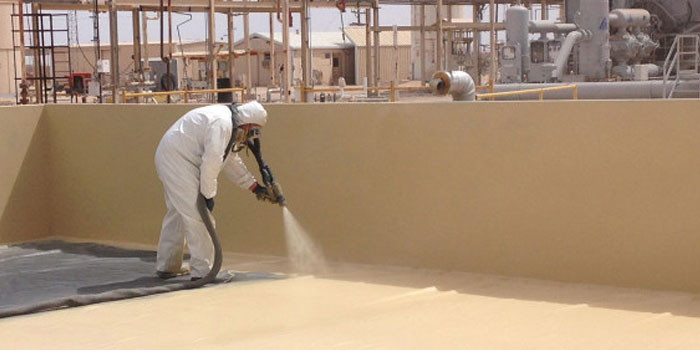
Application is performed with specialized plural-component spray equipment that heats the two components separately and mixes them at the gun tip. Temperature and pressure parameters must be carefully controlled throughout the application process. This is not a material that tolerates casual technique — the combination of rapid cure time and precise mixing requirements means that applicator training and experience matter significantly more than with slower-curing systems.
Most commercial polyurea systems are applied in a single day and can be returned to service within hours. This is a meaningful operational advantage in environments where extended shutdowns carry significant production costs. Facilities that have struggled with multi-day epoxy application windows often find the transition to polyurea systems considerably less disruptive.
Maintaining Polyurea Containment Systems Over Time
One of the arguments often made in favor of polyurea is that it requires relatively little ongoing maintenance compared to conventional coating systems. This is largely true, but “relatively little” should not be read as “none.” Like any engineered system in an industrial environment, polyurea containment requires periodic inspection and occasional repair to maintain its protective function.
Annual inspections should check for mechanical damage caused by forklifts, dropped materials, or other impact events. Polyurea is tough, but a sharp corner dropped from sufficient height can penetrate the membrane. These damage points should be repaired promptly, as they represent the same kind of vulnerability as a crack in conventional concrete coating.
Chemical exposure history matters. A containment system that has handled multiple significant spills of aggressive chemicals should be evaluated more frequently. In some cases, a topcoat refresh every several years extends the effective service life of the system without requiring a full replacement.
Documentation is an underappreciated part of containment maintenance. Keeping records of inspection findings, repair events, and chemical exposure incidents not only supports compliance but also provides the historical context needed to make intelligent decisions about when a system needs more substantial attention versus routine upkeep.
Safety Standards and Regulatory Alignment
Secondary containment requirements in the United States flow primarily from several regulatory frameworks including EPA’s Spill Prevention, Control, and Countermeasure (SPCC) rules for petroleum storage, RCRA regulations for hazardous waste management, and various state-level environmental programs that often exceed federal minimums. Facilities handling specific chemicals may also face requirements under the Clean Water Act, EPCRA, or sector-specific programs administered by agencies like the USDA or state departments of agriculture.
Polyurea-based containment systems, when properly designed and installed, can support compliance with all of these frameworks. The key is documentation — specifying the coating system used, its tested chemical resistance characteristics, the thickness applied, and the inspection and maintenance program in place. Regulatory inspectors increasingly understand modern coating technologies, and facilities that can present a coherent containment strategy backed by quality documentation tend to fare better in enforcement interactions than those relying on visual inspection of aging concrete berms.
Facilities should also be aware that some insurance programs now offer premium incentives for documented secondary containment upgrades. The cost of a polyurea coating installation may be at least partially offset by multi-year insurance savings, particularly for larger facilities with significant chemical storage volumes.
Making the Case Internally for a Containment Upgrade
Safety and environmental managers often know their facility’s containment infrastructure needs attention long before leadership is willing to commit capital to address it. Making the business case effectively requires connecting containment risk to the financial metrics that drive executive decisions.
Start with the real cost of a containment failure event. A realistic estimate of environmental remediation costs, regulatory penalties, insurance impacts, and operational disruption for a facility-specific scenario tends to be sobering. When that number is compared to the installed cost of a modern polyurea containment system, the return on investment calculation often looks very different than when the project is framed simply as a compliance expense.
Operational benefits deserve mention as well. Polyurea-lined floors are easier to clean, which reduces housekeeping labor costs. The seamless surface resists chemical staining and degradation, which extends the interval between major floor maintenance events. Facilities that have made the transition often report that the operational benefits alone justify the upgrade cost over a five-to-seven-year horizon, independent of any spill prevention value.
Risk management and insurance stakeholders within the organization can be powerful allies in this process. Bringing them into the conversation early, and presenting the project as a risk reduction initiative rather than a maintenance expense, often shifts internal conversations in productive directions.
Final Thoughts
Secondary containment is not a glamorous part of facility safety management. It doesn’t generate the same conversation as personal protective equipment programs, emergency response drills, or behavioral safety initiatives. But when a containment system fails — and poorly maintained systems do fail — the consequences reach across every dimension of a facility’s operation, from worker safety to environmental liability to financial performance.
The materials available for building and rehabilitating containment systems have improved dramatically over the past two decades. Polyurea coatings represent the current best practice for most industrial containment applications, offering a combination of chemical resistance, flexibility, durability, and installation speed that no previous coating technology has matched. Facilities that are still relying on aging epoxy systems or uncoated concrete berms are carrying more risk than they need to — and the gap between what they have and what is now available continues to widen.
Investing in proper secondary containment infrastructure is ultimately an investment in operational continuity, regulatory standing, and the safety of the people who work in and around your facility every day. That’s not a hard argument to make when you look at what’s actually at stake.