
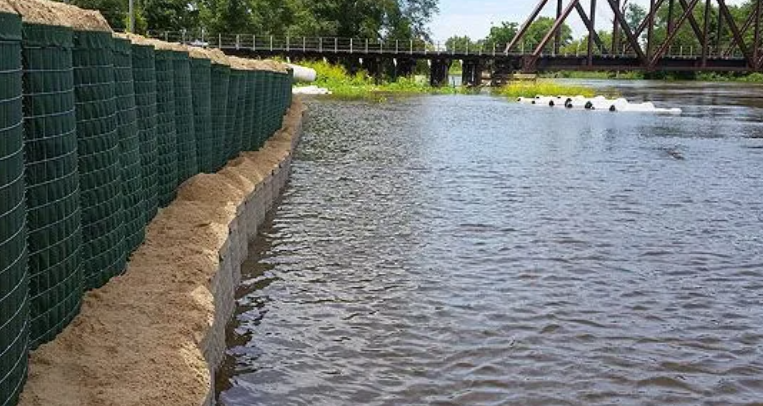
Securing Forward Operating Bases (FOBs), ammunition depots, and critical infrastructure against ballistic threats and explosive blast waves demands high-integrity physical barriers. Traditional concrete walls present massive logistical burdens due to their weight and rigidity, while simple earth berms lack vertical stability under severe weather and kinetic impact.
The integration of wire-mesh concertainer units—commonly known as a hesco barrier—has redefined force protection. The cellular structure absorbs and dissipates kinetic energy from blast waves and shrapnel, turning loose earth or gravel into a formidable defense wall. These collapsible units are flat-packed for easy transport and rapidly expanded on-site, drastically reducing military transport footprints.
To guarantee structural resilience under extreme environmental conditions, defense procurement officers should source directly from a certified hesco barrier manufacturer. Quality producers utilize Galfan-coated (zinc-aluminum alloy) steel mesh and heavy-duty, UV-stabilized geotextile fabric to prevent material degradation.
When evaluating an active hesco barrier for sale, verifying key technical specifications—such as wire diameter, mesh aperture size, and liner density—is essential for ensuring long-term field reliability.