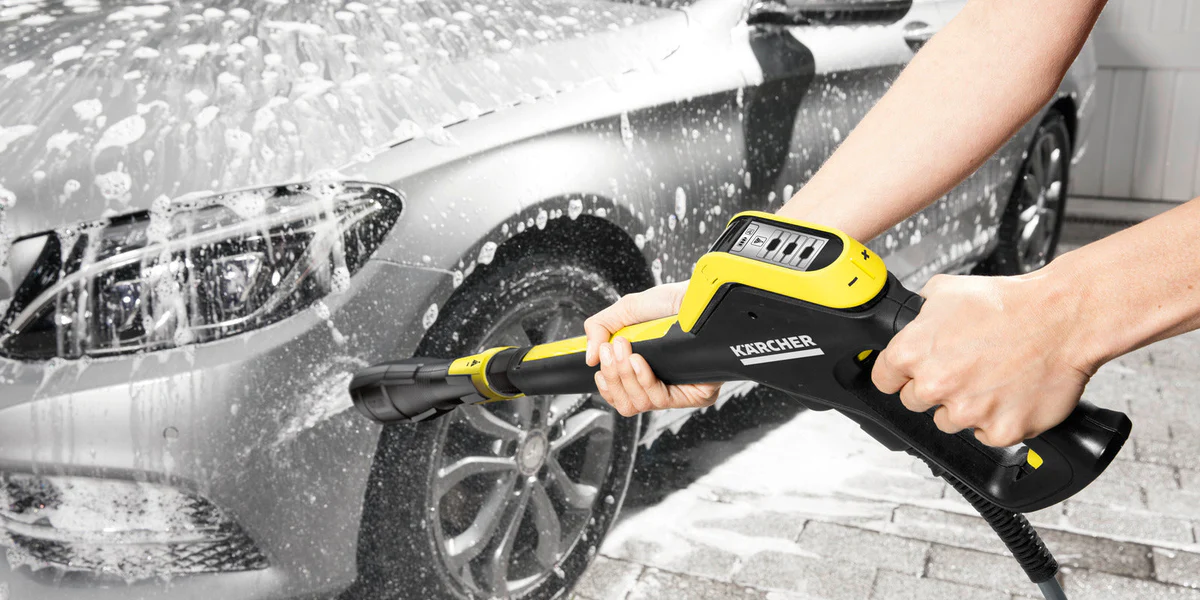
If you have already upgraded to a pressure washer for your driveway detailing, you have taken a massive step toward protecting your vehicle’s clear coat. However, the pre-rinse and foam cannon stages are only half the battle.
The moment you actually touch your car’s paint with a wash mitt is the exact moment you are most likely to inflict micro-scratches and swirl marks. This is where the infamous Two-Bucket Method comes into play. It is the gold standard for safe contact washing, and once you adopt it, you will never look at a single soapy bucket the same way again.
Here is everything you need to know to execute a flawless, scratch-free wash.
The Problem with the Single Bucket
Think about the traditional car wash process: you dip a sponge into a bucket of soapy water, wipe it across a dirty car panel, and then dip that same dirt-filled sponge back into the same bucket.
Every time you do this, you are contaminating your clean wash water with abrasive grit. By the time you reach the other side of your car, you are essentially rubbing liquid sandpaper all over your pristine clear coat. Any way you can read about the best car pressure washers in India here. Those tiny circular scratches you see in direct sunlight? That is the result of single-bucket washing.
Enter the Two-Bucket Method
The solution is incredibly simple but highly effective. Instead of one bucket, you use two:
- The Wash Bucket: Filled with your favorite automotive shampoo and clean water.
- The Rinse Bucket: Filled with plain, clean water.
The Essential Gear
Before you start, you need the right tools to make this system work perfectly.
- Two 5-Gallon Buckets: Ideally, use different colors (e.g., one white, one orange) or clearly label them so you do not mix them up mid-wash.
- Grit Guards: These are plastic grates that sit at the bottom of your buckets. They trap the dirt you wash off your mitt, keeping it at the bottom of the bucket so it doesn’t float back up into the clean water. You need at least one for the Rinse Bucket, but having one in both is best practice.
- A Microfiber Wash Mitt: Throw away the old-school yellow sponges. Microfiber mitts are designed to lift and trap dirt deep within their fibers, keeping it away from your paint until you rinse it out.
Step-by-Step: How to Wash Like a Pro
Assuming you have already pre-rinsed your car with your pressure washer to remove the heaviest layer of grime, here is the proper workflow for the contact wash:
Step 1: Dip into the Wash Bucket
Submerge your clean microfiber wash mitt into the soapy Wash Bucket. Get it fully saturated with suds. The soap acts as a necessary lubricant between the mitt and your paint.
Step 2: Wash a Single Panel
Gently glide the soapy mitt over one section of the car (e.g., half the hood, or one door). Work from the top of the vehicle downward, as the lower panels are always the dirtiest. Do not apply heavy pressure; let the soapy mitt do the work.
Step 3: Purge in the Rinse Bucket
Before you get more soap, take your dirty mitt and plunge it into the Rinse Bucket (the one with plain water). Vigorously rub the mitt against the grit guard at the bottom of the bucket. This dislodges the dirt, brake dust, and grit from the microfiber and traps it under the grate.
Step 4: Wring it Out
Pull the mitt out of the rinse bucket and wring it out on the ground. Your mitt is now clean and ready for more soap.
Step 5: Repeat the Cycle
Dip your freshly cleaned mitt back into the soapy Wash Bucket, grab some fresh suds, and move on to the next panel.
The Results Speak for Themselves
By the end of your wash, take a look inside your two buckets. Your Wash Bucket should still be filled with relatively clean, soapy water. Your Rinse Bucket, however, will likely be brown, murky, and filled with grit sitting at the bottom.Read more on https://toptenreviews.in/products/toptenreviews.in/products/
Every particle of dirt in that rinse bucket is a scratch that didn’t end up on your car’s paint. The two-bucket method adds perhaps two extra minutes to your weekend wash routine, but it saves hours of painful machine polishing down the road