
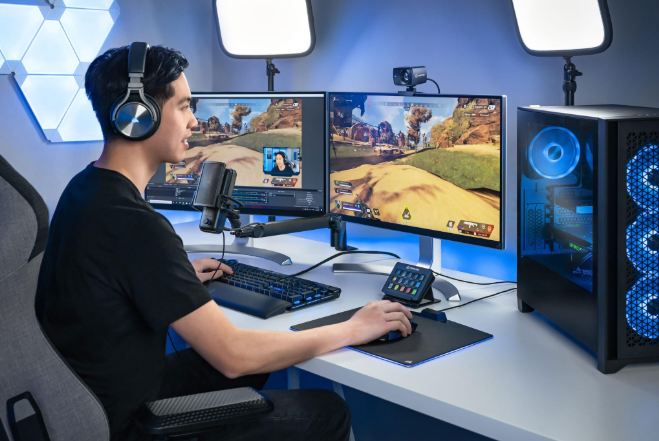
For some people, gaming is a way to unwind after a busy day. For others, it is a place to meet friends, test their skills, or experience adventures that would be impossible in the real world. But behind the excitement of digital entertainment, something else is happening. Gaming is creating opportunities for people to build businesses, develop professional skills, and connect with audiences in ways that were difficult to imagine just a decade ago.
What makes this shift particularly interesting is that business opportunities are no longer limited to companies that create games. The industry has developed an ecosystem involving content creators, designers, equipment sellers, event organizers, marketers, developers, and community managers. Each plays a different role, yet all contribute to an environment where entertainment and entrepreneurship increasingly overlap.
For business owners, digital gaming offers more than a popular trend to follow. It provides a chance to understand changing consumer behavior, discover underserved audiences, and create products or services that make digital experiences more enjoyable. The real opportunity lies not simply in joining the gaming world, but in recognizing where people need something useful and finding a thoughtful way to provide it.
A Growing Digital World Creates New Business Possibilities
Imagine a player who spends several hours each week enjoying an online game. That person might eventually want better equipment, helpful tutorials, customized graphics, opportunities to compete, or a community where other players share similar interests. Multiply those needs across different audiences, and it becomes easier to understand why gaming can support so many types of businesses.
A company might sell accessories designed for mobile gamers, while an independent developer creates tools for managing online tournaments. A content creator could publish educational videos, and a marketing agency might help rajapanen gaming brands communicate with their audiences.
These opportunities do not all require the same investment. Some involve physical products and inventory, while others depend primarily on creative skills, technical knowledge, or communication. This variety allows entrepreneurs to explore different entry points based on their experience and available resources.
However, a large audience does not automatically guarantee a profitable business. The important question is whether a product or service solves a real problem. Entrepreneurs who study what players actually need are more likely to identify useful opportunities than those who simply follow whatever happens to be popular.
Content Creation Is Turning Creativity Into a Business Asset
One of the most visible changes in digital gaming is the rise of creators who build audiences through videos, livestreams, reviews, and educational content. These creators have transformed personal interests into publishing opportunities, sometimes developing recognizable brands around their knowledge or personalities.
Interestingly, there is no single formula for becoming a successful gaming creator. Some attract viewers through impressive competitive skills, while others focus on humor, storytelling, game reviews, tutorials, or discussions about gaming culture. A creator who explains difficult mechanics in simple language may provide more value to beginners than someone who only showcases advanced gameplay.
From a business owner’s perspective, this creates several possibilities. A creator can generate revenue through eligible advertising programs, sponsorships, affiliate partnerships, memberships, or original products. Businesses can also collaborate with relevant creators to introduce products to audiences who are already interested in gaming.
Yet content creation requires more than uploading videos and hoping they become popular. Consistency, originality, audience understanding, and trust all play important roles. Creators must also recognize that income can be unpredictable, particularly when they depend heavily on one platform.
The strongest approach is to build something people genuinely want to return to. An engaged audience that trusts a creator can be more valuable over time than a large audience attracted by a single viral moment.
Small Businesses Can Find Their Place in Gaming Communities
Gaming communities are built around shared experiences. Players discuss strategies, celebrate victories, exchange recommendations, and help newcomers understand unfamiliar games. These interactions can provide valuable insights for entrepreneurs who take the time to listen.
Consider a small business that sells gaming accessories. Rather than promoting products everywhere, it could create useful buying guides, explain differences between equipment options, and answer questions from customers. This approach allows the business to contribute information instead of relying entirely on advertisements.
A graphic designer might join creator communities to understand what livestreamers need. A tournament organizer could communicate with local gaming groups to discover which competition formats interest participants. A software developer might notice repeated complaints about managing team schedules and begin exploring a practical solution.
In each case, the community becomes a source of understanding rather than merely a sales channel.
There is an important distinction here: people do not join gaming communities simply because they want to buy something. They participate because they enjoy the experience, value the relationships, or need information. Businesses that respect those motivations can build stronger connections.
Trust takes time to develop, but it can become a significant advantage when customers have countless alternatives available online.
Digital Products and Services Offer Flexible Starting Points
Not every entrepreneur has the budget to rent a store, purchase inventory, or hire a team. Digital gaming creates opportunities for people who want to begin with smaller projects and gradually develop their skills.
Designers can offer original logos, stream overlays, promotional graphics, and visual branding packages. Writers can create gaming articles, newsletters, tutorials, or strategy guides. Developers may build community websites, event registration tools, or applications that address specific needs.
These services can be especially attractive because they allow entrepreneurs to build a portfolio while learning what customers value. Someone who starts by designing graphics for a few small creators, for example, may gradually identify a particular style or service that distinguishes their work from competitors.
Digital products also require careful planning. Creating a product may involve significant time, and selling it does not guarantee that customers will discover it. Entrepreneurs still need effective presentation, customer support, suitable pricing, and a way to reach the intended audience.
Intellectual property is another essential consideration. Commercial projects must respect game licenses, copyright rules, trademarks, and platform policies. Original work and proper permissions help businesses avoid unnecessary disputes.
The most useful starting point is often a focused offer that solves one clear problem. A small, well-designed solution can be easier to test and improve than a complicated product aimed at everyone.
Esports Is Creating Opportunities Behind the Scenes
Competitive gaming has attracted attention through professional players, major tournaments, and livestreamed events. But the business side extends far beyond the people holding the controllers.
Every well-organized competition may involve event planners, commentators, technical operators, graphic designers, video editors, marketing specialists, and people responsible for coordinating participants. Sponsors may also need support with campaign planning, audience engagement, and promotional materials.
For entrepreneurs, these roles demonstrate that gaming businesses can be built around existing professional skills. Someone with experience in event management does not need to become a professional gamer to organize a competition. A video editor can specialize in match highlights, while a designer can help teams develop a consistent visual identity.
Smaller projects can provide a practical entry point. Organizing an online community tournament or helping a local team improve its promotional content may reveal whether there is demand for a larger service.
Nevertheless, esports involves competition, operational costs, and uncertain audience interest. Event organizers must plan carefully, establish clear rules, communicate with participants, and avoid assuming that every tournament will attract sponsors.
The opportunity is real, but success depends on delivering an experience that players, viewers, and partners find worthwhile.
Marketing Is Changing Along With Digital Entertainment
Traditional advertising often competes for attention in crowded spaces. Gaming offers businesses another way to reach people through content, creator partnerships, competitions, and community activities.
For example, a company selling computer accessories might collaborate with a creator who regularly reviews equipment. A brand could support a gaming event, while a digital agency might help developers introduce new releases to relevant audiences.
The most effective partnerships usually begin with compatibility. A product should make sense for the audience, and the promotional message should fit the creator’s usual content. An irrelevant collaboration can feel intrusive, even when it reaches thousands of viewers.
Business owners should also look beyond follower counts. Audience engagement, credibility, content quality, and the relevance of the product may be more informative than popularity alone. Transparent disclosures and honest claims help protect the relationship between creators and their audiences.
Gaming marketing is not simply about placing a brand in front of players. It is about finding a suitable way to become part of an experience they already enjoy.
Turning an Opportunity Into a Sustainable Business
Excitement about digital gaming can inspire new ideas, but building a business requires practical decisions. Entrepreneurs need to understand their customers, estimate costs, evaluate competition, and determine how their products or services will generate revenue.
A sensible first step is to test an idea on a small scale. Before investing heavily in inventory or software development, speak with potential customers, publish a sample, offer a limited service, or organize a small event. Their responses can help reveal whether the idea addresses a genuine need.
Financial planning is equally important. Revenue is not the same as profit, and a popular product may still be unprofitable if its operating costs are too high. Business owners should consider production expenses, platform fees, taxes, marketing, and the time needed to deliver their services.
It is also wise to avoid relying entirely on one source of income. A creator might eventually combine suitable advertising opportunities with original products, while a digital service provider could work with several types of clients. Diversification cannot eliminate risk, but it may reduce dependence on a single platform or customer.
Most importantly, entrepreneurs should remain willing to adapt. If customers repeatedly request a different feature, that feedback deserves attention. If a marketing approach fails, the results can help shape the next experiment.
A successful business is rarely the result of one perfect decision. More often, it develops through a series of informed choices, adjustments, and lessons learned along the way.
The Future Belongs to People Who Understand Digital Audiences
Technology will continue to change the gaming landscape. Artificial intelligence may assist with certain creative and operational tasks, cloud services can influence how people access games, and emerging interactive technologies may create new forms of entertainment.
These developments could provide opportunities for businesses that offer useful solutions, but they will also introduce new competition and responsibilities. Entrepreneurs will need to consider privacy, accessibility, intellectual property, and the changing expectations of digital audiences.
Rather than chasing every new development, business owners can focus on understanding how technology changes people’s needs. A tool becomes valuable when it makes an experience better, saves time, improves accessibility, or solves a problem that matters to customers.
This people-first perspective can help businesses remain relevant even as particular platforms and trends change. Technology may open the door, but the ability to understand customers is what helps a business make meaningful use of the opportunity.
Conclusion: Gaming Is More Than Entertainment
Digital gaming has developed into a space where creativity, technology, communication, and commerce meet. It offers business owners opportunities to create content, provide services, develop products, organize events, and connect with communities that share specific interests.
However, the biggest lesson is not that every popular game represents a chance to make money. It is that every active audience has its own needs, expectations, and challenges. Entrepreneurs who pay attention to those details can discover opportunities that others overlook.
A business might begin with a simple tutorial, an original design, a helpful online community, or a small competition. With careful planning and a commitment to quality, that first project may become the foundation for something more substantial.
Gaming will continue to entertain people, but its influence reaches far beyond the screen. For business owners willing to learn, listen, and create value, digital gaming can offer a meaningful starting point for new ideas and lasting professional growth.