Building a conveyor involves more than placing rollers or a belt between two supports. Strong framing must hold moving parts in alignment, provide mounting space for controls, and allow technicians to reach components during maintenance. MiniTec extruded aluminum framing simplifies that work through modular profiles and hardware that can be assembled, adjusted, and expanded without heavy fabrication.
Speeds up Frame Assembly
Precut profiles help crews begin assembly as soon as the parts arrive. Installers connect rails with brackets, fasteners, and joining plates instead of waiting for welded sections to be fabricated, ground, painted, and delivered. Clear drawings and labeled components can further reduce time spent measuring or sorting pieces at the worksite. Bolted construction also makes alignment easier during the early stages. Builders can leave joints slightly loose, square the conveyor frame, check roller spacing, and tighten each connection after confirming the layout. An aluminum framing kit prepared for a specific conveyor can therefore shorten installation while reducing errors that might affect belt tracking.
Reduces Welding and Machining
Mechanical connections remove much of the hot work associated with traditional steel fabrication. Shops do not need to weld every cross member, grind rough joints, or repaint surfaces after making a change. That difference can make installation cleaner around active production areas, finished products, and sensitive equipment.
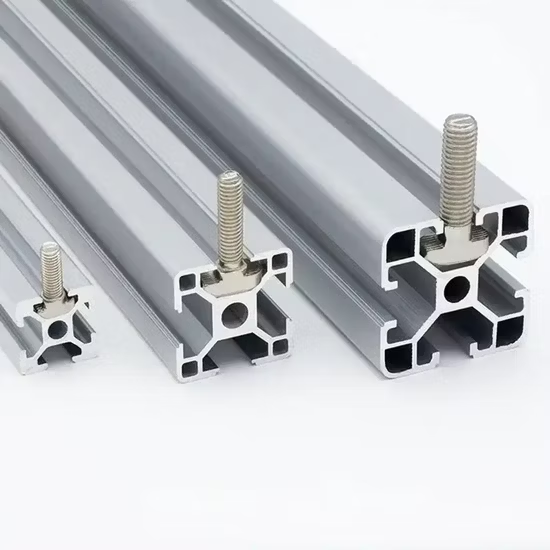
Standard slots also reduce drilling. Brackets, guards, sensors, and cable supports can attach directly to an extruded aluminum T slot channel with matching nuts and bolts. Machining may still be needed for certain shafts or drive components, but the main frame often requires fewer custom holes.
Makes Conveyor Lengths Easier to Adjust
Production layouts sometimes change after a conveyor has already been built. A line may need extra space for inspection, packaging, accumulation, or another machine. T slot extrusion allows crews to extend or shorten sections by replacing rails, moving supports, or adding new frame modules.
Modular adjustment also helps during initial setup. Technicians can shift cross members, change leg spacing, or reposition transfer points before locking the structure in place. This flexibility makes MiniTec Aluminum Framing useful for facilities where equipment arrangements develop alongside production needs.
Supports Quick Mounting of Guides and Sensors
Product guides must sit at the correct width and height to keep parts moving in the intended path. Slotted profiles let installers mount rails, brackets, stops, and side guides without permanently fixing their position. Operators can later adjust those components for different package sizes or product shapes.
Sensors benefit from the same mounting freedom. Photoelectric devices, barcode readers, limit switches, and counters can slide along the T slot aluminum extrusion until they detect products reliably. Accessible mounting points also make damaged devices easier to replace without disturbing the main conveyor structure.
Simplifies Motor and Roller Installation
Drive motors, gearboxes, bearings, and rollers need firm support and accurate alignment. Modular plates and brackets allow these components to mount directly to the aluminum framing material while leaving room for tensioning and service access. Reinforced profiles can be placed only where higher loads occur, keeping the rest of the conveyor lighter.
Roller spacing can also be changed more easily than on a fully welded frame. Supports may move to suit product length, belt width, or transfer requirements. MiniTec extruded aluminum framing gives designers several profile sizes, making it possible to match the frame with the conveyor’s speed, span, and operating load.
Allows Fast Repairs and Layout Changes
Damaged sections do not always require replacing the complete conveyor base. Technicians can remove a bent rail, worn bracket, or broken accessory and install a matching part with basic tools. That repair method can reduce downtime because crews avoid cutting apart surrounding members.
Layout updates become simpler for the same reason. Workers may relocate legs, add guarding, move controls, or change discharge height while preserving much of the existing frame. Reusable profiles and connectors also reduce waste when a conveyor moves to another area.
Keeps Future Expansion Straightforward
Growing production lines often need longer conveyors, added workstations, or new automated equipment. A modular system gives engineers a clear way to attach those additions without designing an entirely separate support structure. Compatible profiles can carry platforms, panels, controls, and transfer sections as the line develops.
Planning ahead still improves the result. Designers should leave suitable mounting space, choose profiles with enough stiffness, and consider where future drives or supports may sit. MiniTec Solutions supplies MiniTec Aluminum Framing, matching hardware, and conveyor components that help manufacturers build systems suited to current operations while keeping later changes practical.