
Two years ago, the question every VC associate got asked at a partner meeting was “how do we get into this deal?” In 2026, the harder question is “how did we not see this deal three weeks earlier?”
The competitive landscape inside venture has flattened. There are too many funds, too much capital, and too many founders raising quietly through warm channels. Brand still matters, but brand alone no longer wins competitive rounds. What wins is being early, being in the conversation when the deck is still being written, not when it is already in five other inboxes.
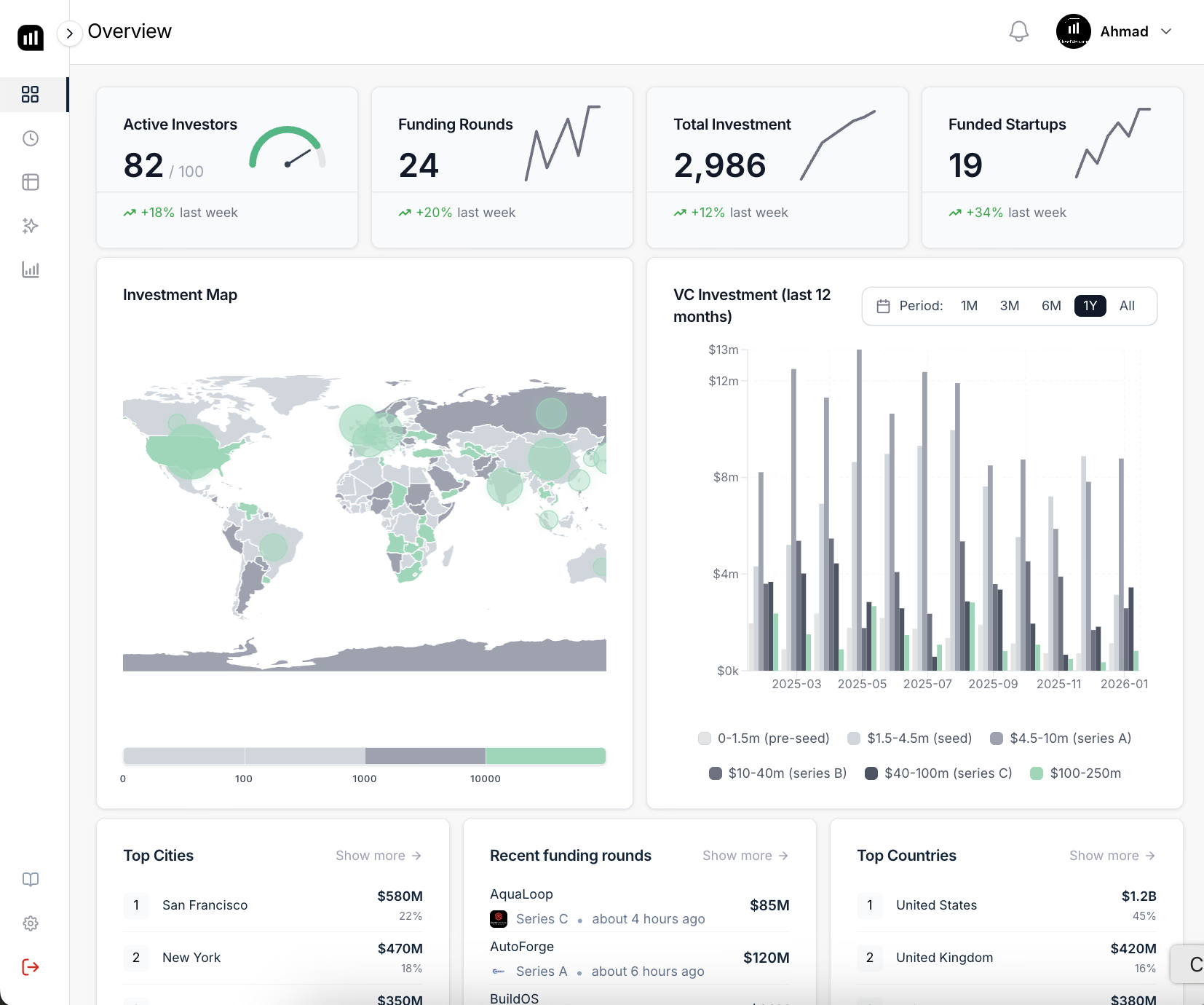
That is why the most active firms of 2026 have rebuilt their sourcing stack around live deal flow intelligence. The firms still relying on quarterly database refreshes and inbound deal volume are losing to firms that see signals in real time.
What “live deal flow” actually means
It is not the same as a deal database. A database tells you what already closed. Live deal flow tells you what is about to happen. It is the layer of signals that surfaces a fundable company while it is still in stealth, still iterating on its deck, still picking which 20 funds to pitch.
These signals come from a mix of sources:
- Founder LinkedIn changes (title shifts, “advisor” to “founder”)
- Hiring spikes around go-to-market or engineering leadership
- Web traffic acceleration
- GitHub activity in technical companies
- Customer review velocity
- Sector-specific funding cadence
- Partner-level activity at adjacent funds
None of these alone is decisive. Stacked together, they paint a picture of a company moving toward a raise, usually 60 to 90 days before the founders start emailing investors.
Why this matters for win rate
In a competitive deal, the partner who is in the conversation first has a structural advantage:
- They build the relationship before the auction starts
- They get to shape thesis with the founder
- They get optionality on lead status
- They negotiate from preferred-partner footing, not bidder footing
Funds that arrive after the deck has already been sent to 30 inboxes are bidding on someone else’s process. A real private market intelligence layer changes the timing math.
The new sourcing org chart
Top firms are reorganizing how associates and platform teams operate around live data. Instead of one analyst running a research project on a sector for three weeks, the team now monitors live signal streams continuously. When a signal cluster emerges around a company, hiring, funding, traffic, partner network, the system flags it and a partner is on the phone within 48 hours.
This is not science fiction. The firms doing this are systematically beating brand-only firms in competitive seed and Series A rounds. The data does not replace partner judgment. It just means partners spend their time on companies that are actually about to move, instead of cold-reading thousands of inbound decks.
Live signals beyond sourcing
Live deal flow data is not only useful for finding new deals. It is increasingly the backbone of:
- Portfolio support (knowing when a portfolio company’s competitor raises)
- Talent intelligence (knowing when a key engineer leaves a competitor)
- Partnership monitoring (knowing when key channel partners shift)
- Exit timing (knowing when buyers are most active in your sector)
This dual use is why top firms now treat investor-side intelligence software as core infrastructure, not a research tool. It sits next to the CRM, the data room, and the LP reporting stack.
The associate’s new job
If you are an associate or principal at a fund in 2026, your job is no longer “build investor lists” or “summarize decks.” Your job is to interpret signals, prioritize partner attention, and accelerate first conversations. The firms that are winning are the ones where partner time is allocated by data, not by inbound volume.
Where this is going
The firms that figure out active deal sourcing as a continuous, signal-driven function will own the next five years of venture returns. The firms that do not will keep wondering why competitors keep showing up first.
Speed is the new moat in venture. And speed is built on live data, not on legacy brand.