
Brands have learned expensive lesson: not all influencers are created equal. Bad influencer partnerships destroy brand reputation. Good influencer partnerships generate revenue. Brands now vet influencers rigorously before partnerships. Vetting process separates legitimate creators from fakers. Creators who understand vetting criteria pass easily. Creators who ignore vetting criteria get rejected. This is the influencer vetting reality in 2026.
Why Brands Vet: The Cost of Bad Partnerships
Brand partners with influencer. Influencer has 500,000 followers. Post goes live. Engagement is 0.5%. Followers do not buy. Campaign fails. Brand wasted $50,000. Why? Influencer had fake followers. Bot followers. Dead followers. Brand paid for reach that did not exist. This happens constantly. Brands have learned to vet. Vetting is insurance against bad partnerships. Brands protect investment through rigorous vetting process.
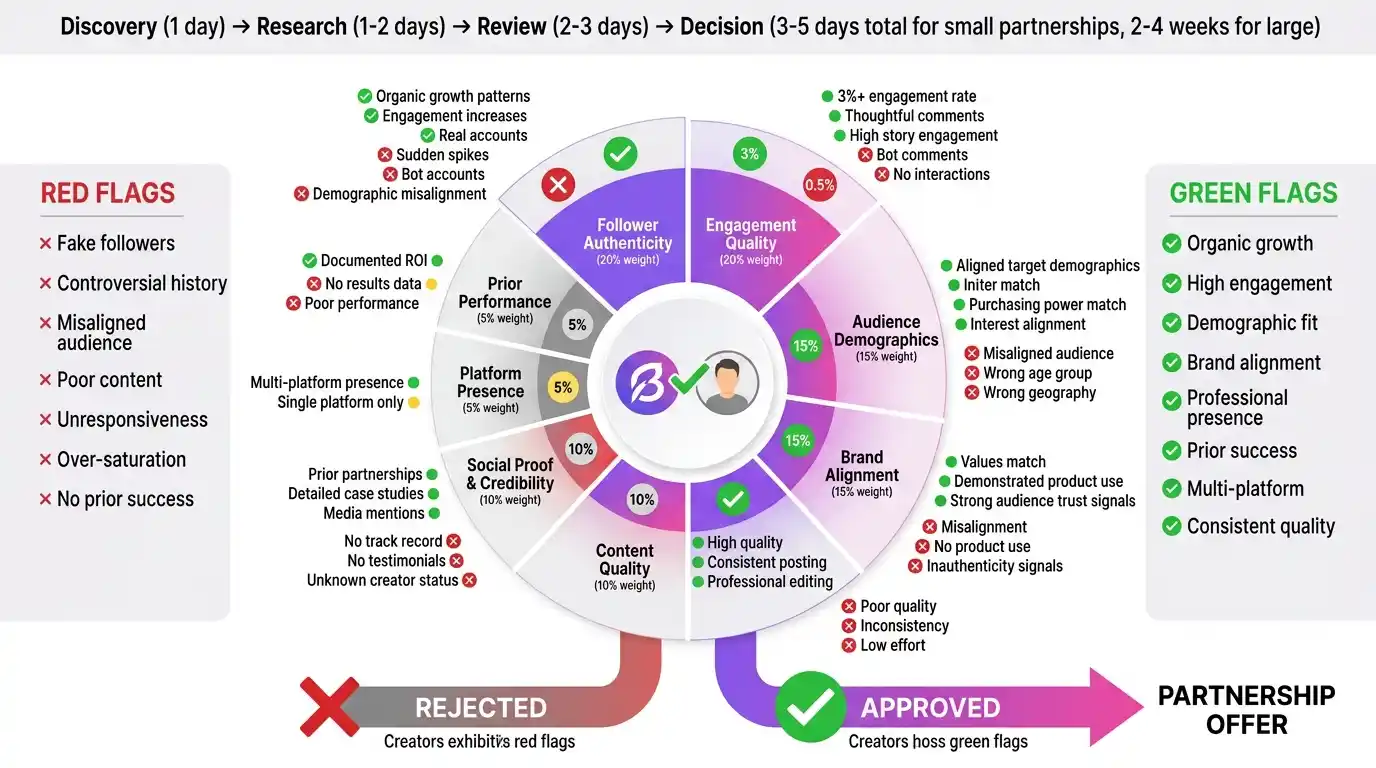
The Vetting Criteria: What Brands Actually Check
Criteria 1: Follower Authenticity (20% of vetting weight)
Brands check follower quality using tools (HypeAudience, Social Blade, Dalia Research). They look for: Follower growth pattern (should be organic, not sudden spikes). Engagement rate (should be 3%+ for established creators). Follower composition (should have real accounts, not bot accounts). Comment quality (should be thoughtful, not generic spam). Brands verify that followers are real people in target demographic.
Using boost social media credibility strategically helps. Strategic growth reaches target baseline (50K followers) quickly. But baseline must be paired with authentic engagement. Brands notice sudden follower spikes without engagement increase. Red flag. Brands notice organic growth paired with rising engagement. Green flag. Growth paired with authenticity passes vetting. Growth without authenticity fails vetting.
Criteria 2: Engagement Quality (20% of vetting weight)
Brands look beyond follower count. Engagement rate matters more. Brands want 3%+ engagement rate. They analyze: Comment sentiment (positive or negative?). Comment authenticity (real people or bots?). Story engagement (do followers watch stories?). DM responsiveness (does creator respond?). High engagement with real followers is green flag. Low engagement or bot comments is red flag.
Criteria 3: Audience Demographics Alignment (15% of vetting weight)
Brand wants to reach specific demographic. Influencer must have that demographic. Brand selling luxury fashion wants followers with high purchasing power. Brand wants influencer with affluent audience. Brand selling fitness products wants followers interested in fitness. Brand wants influencer with fitness-focused audience. Demographic mismatch is automatic rejection. Brands use tools (Helixa, Rival IQ) to analyze audience demographics. If audience does not match, partnership fails.
Criteria 4: Brand Alignment (15% of vetting weight)
Influencer content should align with brand values. Influencer posting party content cannot promote productivity app. Misalignment creates inauthenticity. Followers notice. Partnership fails. Brands want influencers whose values match brand values. Does influencer use product? Does influencer recommend similar products? Does influencer’s audience trust their recommendations? Brand alignment is critical.
Criteria 5: Content Quality (10% of vetting weight)
Brand reviews creator’s recent content. Is it high quality? Is it consistent? Is it engaging? Poor quality content is red flag. Inconsistent posting is red flag. Boring content is red flag. Brands want creators with professional, consistent, engaging content. Content quality reflects on brand.
Criteria 6: Social Proof and Credibility (10% of vetting weight)
Brand checks: Has creator done brand partnerships before? Are there testimonials? Are there case studies? Is creator mentioned in media? Using buy real Instagram followers paired with strategic positioning builds credibility. Follower baseline plus professional bio plus brand partnerships history equals credible creator. Brands want to partner with creators who have proven track record.
Criteria 7: Platform Presence Diversity (5% of vetting weight)
Creator present on multiple platforms is green flag. Creator only on one platform is minor red flag. Brands prefer creators with presence on TikTok, Instagram, YouTube, Twitter. Multiple platforms show that creator is serious business. Single platform could be accident. Multiple platforms is intentional brand building.
Criteria 8: Prior Partnership Performance (5% of vetting weight)
If creator has previous partnerships, brands want results. Brands ask: How many sales were generated? What was ROI? What did followers say about product? Poor prior performance disqualifies creator. Strong prior performance fast-tracks approval.
The Vetting Red Flags: What Disqualifies Creators
Red Flag 1: Fake Followers
Sudden follower spike without engagement increase. Followers from random countries without demographic alignment. Comments from bot accounts. Brands instantly disqualify creators with fake followers.
Red Flag 2: Controversial Past
Creator with racist posts, sexist content, or political controversy. Brand does not want association. Creator with no vetting for controversial history is liability. Brands spend time vetting creator history. Any controversial finding is disqualification.
Red Flag 3: Misaligned Audience
Creator has followers but wrong demographic. Wrong age, wrong interest, wrong geographic location. Partnership will not convert. Brand passes.
Red Flag 4: Poor Content Quality
Blurry photos. Inconsistent posting. Boring captions. Lack of effort. Brand product deserves better. Creator disqualified.
Red Flag 5: Unresponsiveness
Brand reaches out. Creator takes weeks to respond. No professionalism. Brand moves to next creator.
Red Flag 6: Over-Saturation with Competitors
Creator promoting 50 brands simultaneously. No loyalty. No focus. Brand worries creator is shilling for everyone. Red flag.
Red Flag 7: No Previous Success
Creator has no prior partnerships. No proof of ability. Brand wants experienced creators with track record.
The Vetting Green Flags: What Creators Should Build
Green Flag 1: Authentic Organic Growth
Followers growing steadily every month. No sudden spikes. Engagement increasing alongside followers. This signals authenticity. Brands approve immediately.
Green Flag 2: High Engagement Rate
5%+ engagement rate is excellent. Comments are thoughtful and real. Followers actually care about content. Brands want this.
Green Flag 3: Demographic Alignment
Creator’s audience matches brand’s target customer. Creator clearly understands their demographic. Audience is cohesive and specific.
Green Flag 4: Brand Values Alignment
Creator’s personal brand aligns with potential partner brand. Creator genuinely uses similar products. Audience trusts creator recommendations. Partnership is natural.
Green Flag 5: Professional Presence
Creator has polished bio explaining who they are and what they offer. Creator has professional media kit. Creator has clear rate sheet. Creator looks like professional business, not amateur hobby.
Green Flag 6: Prior Partnership Success
Creator has case studies showing partnership results. Creator has testimonials from previous brand partners. Creator has proven ROI.
Green Flag 7: Multi-Platform Presence
Creator active on multiple platforms. Cross-promotes content. Reaches audience wherever they are. Signals serious creator business.
Green Flag 8: Consistent Quality Content
Creator posts regularly (at least 2-3x weekly). Content is high quality. Captions are thoughtful. Editing is professional. Brand trusts this creator to represent product well.
The Creator Playbook: How to Pass Vetting
Step 1: Build Authentic Follower Base
Post consistently (3-5x weekly). Create valuable content. Engage with followers. Use social proof services for creators to accelerate baseline (50K followers). Pair baseline growth with authentic engagement strategy. Result: 50K followers with 5%+ engagement rate. This passes vetting.
Step 2: Define Clear Niche
Do not be generic. Be specific. “I post about productivity” is too broad. “I help solopreneurs optimize their morning routines for productivity” is specific. Specific niche attracts aligned brand partners. Generic niche attracts no one.
Step 3: Build Professional Presence
Create media kit showing: Follower count and demographics. Engagement rates. Prior partnership results (if available). Testimonials. Rates per post. Professional media kit shows you are serious business. Amateur creators without media kit do not pass vetting.
Step 4: Clean Up Social History
Delete controversial posts. Remove anything that could be misinterpreted. Brands vet social history extensively. One controversial post disqualifies you. Clean history is green flag.
Step 5: Develop Case Studies
First partnership is hardest because no track record. Do first partnership with micro-brand or startup. Get result data. Create case study. Document ROI. Second partnership is easier because you have proof. Continue building case studies. By 5th partnership, you have impressive track record.
Step 6: Build Multi-Platform Presence
Do not be Instagram-only creator. Build on TikTok. Build on YouTube. Build on Twitter. Multi-platform presence is green flag. Brands want creators with reach everywhere.
Step 7: Stay Consistent
Post regularly. Maintain quality. Do not disappear for weeks. Consistency is signal that you are serious. Inconsistency is red flag.
The Vetting Timeline: How Long Brands Take
Brand discovers creator. Brand spends 1-2 days researching: checking followers, analyzing engagement, reviewing content history. Brand spends another 2-3 days making decision. Total vetting process: 3-5 days for small partnerships. 2-4 weeks for large partnerships (includes legal review). Creators should assume 2-4 week lead time between initial contact and final agreement.
The Bottom Line: Vetting Is Getting Stricter
Brands have learned expensive lesson about bad influencer partnerships. Vetting is now rigorous. Creators who build authentic presence with real engagement, professional positioning, and proven track record pass vetting easily. Creators with fake followers, no engagement, unclear positioning, or controversial history fail vetting. Build credibility intentionally. Pass vetting confidently. Win partnerships easily