
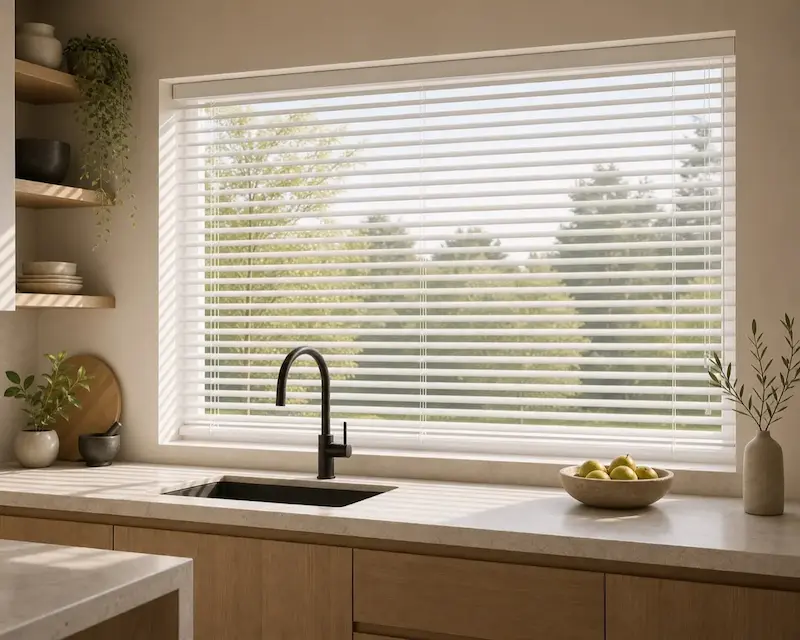
Renovating aoring, paint colours, lighting, built-in cabinets and furniture usually get most of the attention. Window treatments, on the other hand, are often left until the final stages of the renovation.
That can be a mistake.
The right blinds influence much more than how a window looks. They affect how much daylight enters a room, how much privacy you have, how comfortable a space feels during the day and how well the overall interior design comes together.
For homeowners comparing factory-direct blinds in Malaysia, understanding how the factory-direct model works can also help you make a more informed decision about where your renovation budget actually goes.
Rather than simply choosing the cheapest quotation, it is worth looking at the entire process — from measurement and material selection to manufacturing and installation.
Here is what homeowners should know before choosing blinds for a newly renovated home.
What Does “Factory-Direct Blinds” Actually Mean?
When people hear the term “factory-direct”, the first thing that usually comes to mind is price.
But the concept is bigger than that.
In a traditional retail supply chain, window furnishings may pass through several parties before reaching the homeowner. Depending on the supplier, this could involve manufacturers, distributors, dealers, retailers or showrooms.
Each layer may add operating costs and margins to the final quotation.
A factory-direct model aims to shorten that process.
Instead of purchasing through multiple intermediaries, homeowners work more directly with the company responsible for supplying, customising or producing the blinds.
For homeowners renovating on a carefully planned budget, this can make the purchasing process more straightforward.
However, “factory-direct” should never mean choosing based on price alone.
You should still consider:
- Material and component quality
- Measurement accuracy
- Customisation options
- Installation workmanship
- After-sales support
- Suitability for your specific room
The goal is not simply to find cheap blinds.
It is to find good-value window treatments that suit your home without paying unnecessarily for extra layers in the supply chain.
Why Blinds Should Be Planned Earlier in Your Renovation
A common renovation sequence looks something like this:
Renovate the house first.
Finish the carpentry.
Move in the furniture.
Then think about blinds.
Although this approach can work, planning your window treatments earlier often gives you more flexibility.
Consider a large sliding door in your living room.
Will there be built-in cabinetry beside it?
Where will your curtain box or blind mechanism sit?
Do you want the window covering hidden when fully opened?
Are you considering motorised blinds that may require electrical preparation?
These decisions can affect renovation details.
Planning earlier also allows you to coordinate your blinds with other elements such as:
- Wall colours
- Flooring
- Built-in furniture
- Window frame colours
- Lighting
- Interior design style
A beautiful window treatment should feel like part of the room rather than something added as an afterthought.
Start by Asking What Each Room Actually Needs
One of the biggest mistakes homeowners make is selecting one type of blind for the entire house simply because they like how it looks in a showroom or online.
Different rooms have different requirements.
Before choosing a design, ask yourself four questions:
How much daylight do I want?
How much privacy do I need?
How often will I open or close the blind?
What kind of atmosphere am I trying to create?
The answers can lead you towards very different solutions.
Living Room: Balance Daylight and Privacy
For many Malaysian homes, the living room is one of the brightest spaces in the house.
Large windows and sliding glass doors allow plenty of natural light into the room, but they can also create glare and reduce privacy.
A window treatment that completely blocks daylight may make the room feel unnecessarily dark during daytime.
Instead, homeowners may prefer blinds that help soften or filter incoming light while maintaining a bright interior.
Roller blinds with sunscreen-style fabrics are one practical option for this purpose.
Kova Sun Shade, for example, recommends sunscreen roller blinds as one possible match for living spaces where homeowners want softer daylight while retaining a clean, minimal appearance. oom: Prioritise Light Control and Privacy
Bedrooms usually have different priorities.
Here, privacy and darkness may matter more than maintaining an open view throughout the day.
Blackout roller blinds can be particularly practical for bedrooms because they provide stronger light control when closed while maintaining a relatively simple appearance.
This is especially useful for homeowners who prefer a modern or minimalist interior without visually heavy window treatments.
Large Sliding Doors: Think About Movement
Large glass doors require special consideration.
A blind may look good in a small sample, but homeowners should also think about how it functions across a wide opening.
For sliding doors or larger glass walls, the direction of movement becomes important.
Vertical-style systems such as VertiSheer can work well for these spaces because the blind moves horizontally with the opening rather than requiring the entire covering to be raised vertically.
Kova specifically positions its VertiSheer system for sliding doors and wider glass openings, alongside Roller and Venetian options for other applications. rtant lesson is simple:
Choose blinds according to how you actually use the window, not only how the blind looks in a photograph.
Roller, Venetian or VertiSheer: Which One Fits Your Home?
When researching factory-direct blinds Malaysia homeowners can customise, you will probably come across several different styles.
Three common options worth considering are Roller, Venetian and VertiSheer blinds.
Roller Blinds
Roller blinds are one of the easiest options to integrate into modern interiors.
Their simple structure makes them suitable for homeowners who prefer clean lines without adding too much visual detail around the window.
Depending on the fabric selected, roller blinds can provide different levels of privacy and light control.
They can work particularly well in:
- Bedrooms
- Living rooms
- Home offices
- Study rooms
- Apartments with modern interiors
The fabric choice is just as important as the blind itself.
A sunscreen fabric and a blackout fabric may use the same basic roller system but create completely different experiences inside a room.
Venetian Blinds
Venetian blinds use horizontal slats that can be tilted to control the direction of incoming light.
This gives homeowners more flexibility over privacy and daylight throughout the day.
They can complement contemporary, minimalist and structured interior styles particularly well.
Instead of simply choosing between “open” and “closed”, you can adjust the slats depending on how much visibility or daylight you want.
VertiSheer Blinds
VertiSheer combines the appearance of soft fabric with the functionality of a vertical blind system.
It can be particularly effective across larger openings, including sliding doors.
For homeowners who like the softness associated with curtains but prefer a cleaner or more structured system, this can provide an interesting middle ground.
The best option depends on the room.
There is no single blind that is automatically “best” for every home.
Custom-Made Blinds Matter More Than Many Homeowners Realise
Windows that appear identical may not actually have exactly the same dimensions.
Even relatively small differences can affect how a blind sits within or around the window opening.
That is why accurate measurement matters.
Poorly fitted blinds can create problems such as:
- Uneven gaps
- Poor alignment
- Excessive light entering around the edges
- Awkward operation
- An unfinished appearance
For homeowners investing significantly in renovation, badly fitted window treatments can undermine an otherwise well-designed interior.
Made-to-measure solutions allow the blind dimensions to be matched more closely to the actual opening.
This is particularly important for:
- Floor-to-ceiling windows
- Large sliding doors
- Recessed window openings
- Multiple windows installed side by side
- Unusual window dimensions
When comparing quotations, ask whether professional measurement and installation are included rather than assuming every supplier offers the same service.
Do Not Compare Blind Quotations Based Only on the Final Number
Suppose Supplier A gives you a lower quotation than Supplier B.
Does that automatically mean Supplier A provides better value?
Not necessarily.
Before comparing prices, check whether both quotations include the same specifications.
Look at:
Fabric type
Are you comparing sunscreen, dim-out or blackout materials?
Hardware
What mechanisms and components are being used?
Measurements
Are the blinds standard-sized or customised for your windows?
Installation
Is professional installation included?
Motorisation
Is the quotation for manual or motorised operation?
Warranty and support
What happens if adjustments or servicing are required later?
A cheaper quotation with fewer inclusions is not always cheaper once everything is added.
This is where the factory-direct model can be useful.
By simplifying the purchasing chain, homeowners may be able to focus more clearly on what they are actually paying for: the product, customisation and installation.
Consider Motorisation During Renovation — Not Afterwards
Smart-home features are becoming increasingly relevant during renovation planning.
Blinds are no exception.
Motorised blinds can be useful for:
- Tall windows
- Hard-to-reach windows
- Large glass panels
- Multiple blinds operated together
- Smart-home routines
- Homeowners who want greater convenience
The ideal time to consider motorisation is before renovation work is completed.
Some motor systems can operate using batteries, while others may involve electrical or smart-home integration.
Planning ahead gives your electrician, contractor or interior designer the opportunity to coordinate the necessary setup.
Kova states that its Roller, Venetian and VertiSheer product lines can be configured with motorised options, including different power and smart-control arrangements. n you decide not to motorise every blind immediately, discussing the possibility early can help you avoid unnecessary modification later.
Five Questions to Ask Before Choosing a Blind Supplier
Before confirming an order, ask your supplier these five questions.
1. Who measures my windows?
Professional measurement can reduce the risk of sizing mistakes.
2. Are the blinds made according to my actual window dimensions?
Clarify whether you are purchasing custom-made or standard-sized products.
3. What type of fabric is suitable for each room?
A responsible supplier should recommend materials according to the room’s requirements rather than simply selling the same product everywhere.
4. What exactly does the quotation include?
Ask about measurement, customisation, delivery, installation and optional upgrades.
5. Who handles problems after installation?
After-sales support matters, particularly for customised products and mechanical systems.
A good supplier should be able to answer these questions clearly.
Common Mistakes to Avoid When Buying Blinds During a RenovationChoosing Based Only on Photos
A blind that looks beautiful online may not suit your window size, lighting conditions or interior.
Always consider function alongside aesthetics.
Leaving Window Treatments Until the Last Minute
Late planning can limit your options, especially when electrical preparation, curtain boxes or built-in carpentry are involved.
Using the Same Blind Everywhere
Bedrooms, living rooms and large sliding doors usually have different needs.
Choose according to the space.
Focusing Only on the Cheapest Price
Look at the complete specification, not just the final quotation.
Ignoring How the Blind Looks When Open
Homeowners often focus on how blinds look when closed.
But think about daytime use too.
Where does the blind sit when fully opened?
Does it block part of your view?
Does it interfere with a sliding door?
Good window planning considers both open and closed positions.
Why Factory-Direct Blinds Make Sense for Renovating Homeowners
Renovation is ultimately an exercise in allocating your budget wisely.
You want to spend where quality matters while avoiding unnecessary costs that do not improve your home.
That is why the idea behind factory-direct blinds in Malaysia is attractive.
A shorter supply chain may reduce unnecessary layers between the company producing or supplying the blinds and the homeowner purchasing them.
But the real advantage should not be reduced to price alone.
The ideal combination is:
Factory-direct value + suitable materials + accurate measurement + customisation + proper installation.
Kova Sun Shade follows a direct model in which it describes its process as designing, making and installing its own blinds rather than relying on a traditional multi-layer showroom supply chain. Its current range includes Roller, Venetian and VertiSheer blinds for different residential applications. owners comparing window treatments during renovation, this type of model is worth considering alongside product quality, design choices and service.
Final Thoughts
Your blinds may be one of the last items installed during a renovation, but they should not be one of the last items planned.
They influence privacy, natural light, everyday comfort and the overall appearance of your interior.
Before buying, think about how each room will actually be used.
Choose the right blind for the right window.
Compare specifications instead of prices alone.
Plan motorisation early if it is part of your future smart-home setup.
And when exploring factory-direct blinds Malaysia homeowners can consider, look beyond the “factory-direct” label itself.
The best value comes when a more efficient supply model is combined with the right product, accurate measurements, good workmanship and a solution designed around how you actually live in your home.
A well-chosen blind should not just finish your renovation.
It should make the finished home work better every day.